Snow continued to fall overnight, accumulating do a depth of about an inch, coating the spring flowers with crystals. The morning sun revealed nature's gentle touch.
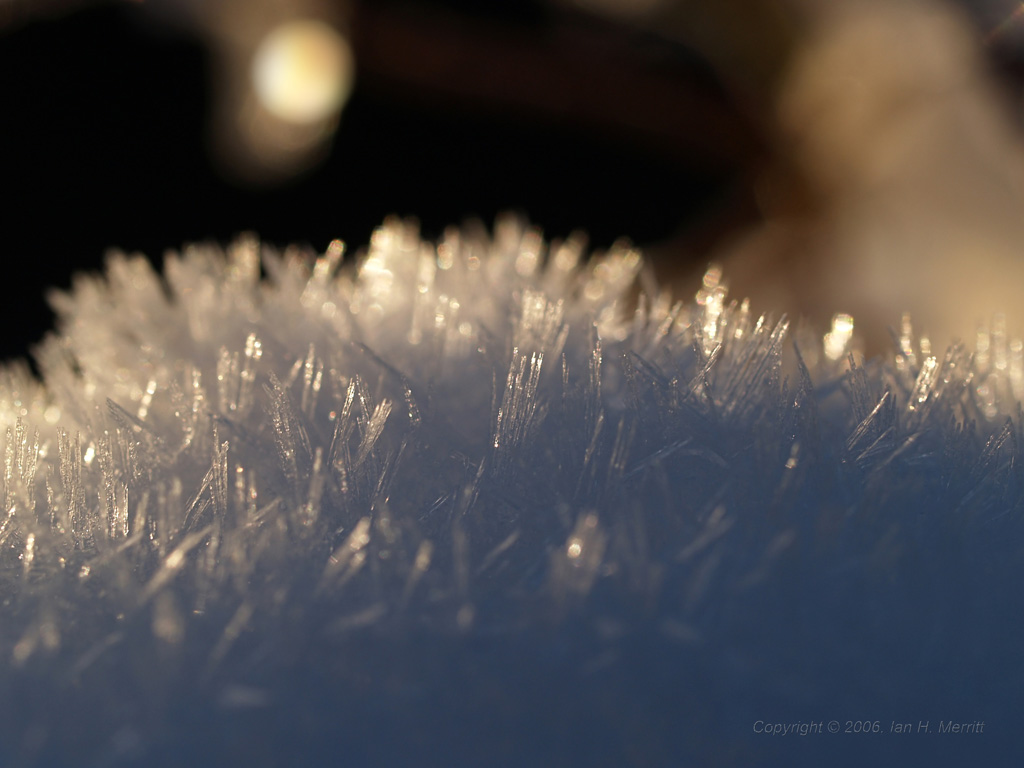
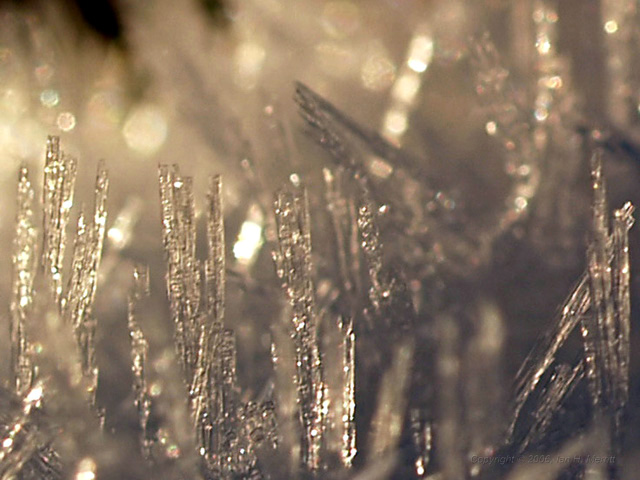
Water. It is basic to life as we know it. We drink it, bathe in it, cook with it. But left to its own devices, aided by cold temperatures, variable humidity and wind, water crystallizes into amazing shapes. Seen here up close is snow after it sat for a while in such conditions.
Snow falls in many places. To most of us, snow is just part of the background. Something pretty on the trees; something to plow from the roadway, shovel out of the driveway, or ball up and throw at someone. But in nature, the closer we look, the more interesting things get.
Throughout the natural world, many shapes are found again and again in different contexts. We see circles, ellipses, spirals, waves, lines, polygons, and many other shapes at various levels of complexity.
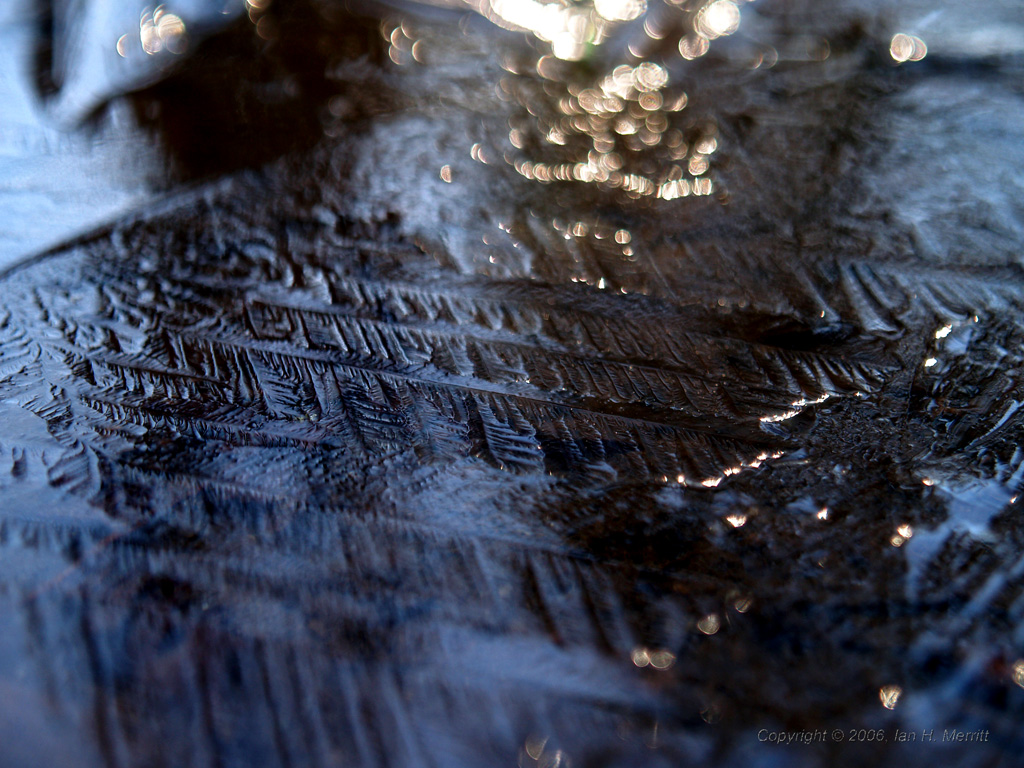
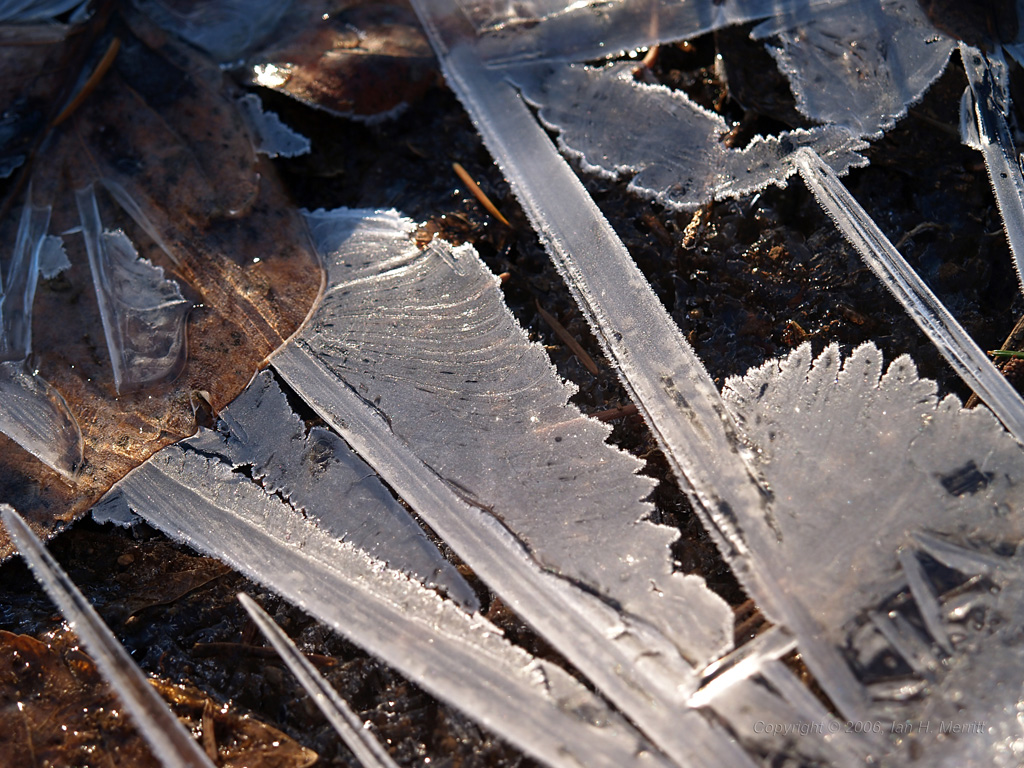
Here we have what appear to be feathers similar to those found on birds, but in this case, made entirely of ice, formed spontaneously over the top of a wet spot of ground. As the temperature dropped, the water feeding this puddle slowed, lowering its level. Molecule by molecule, water evaporated from the top of the lowered puddle and condensed on the crystals that had already begun to form on the earlier surface of the puddle, arranging themselves in this pattern.
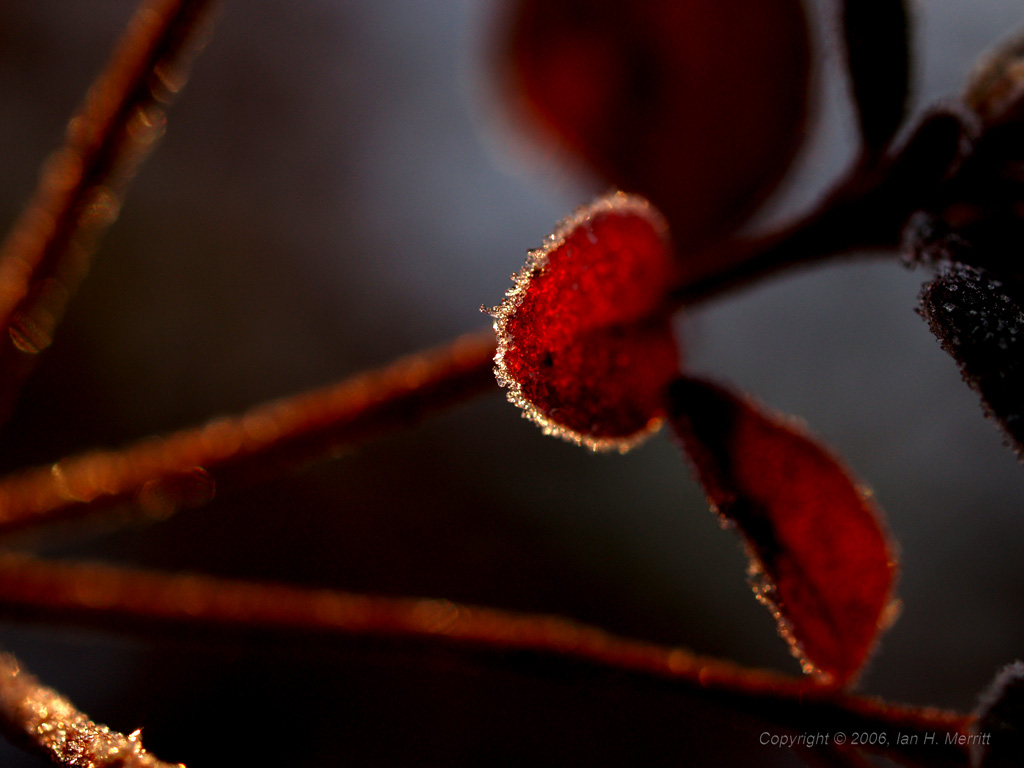
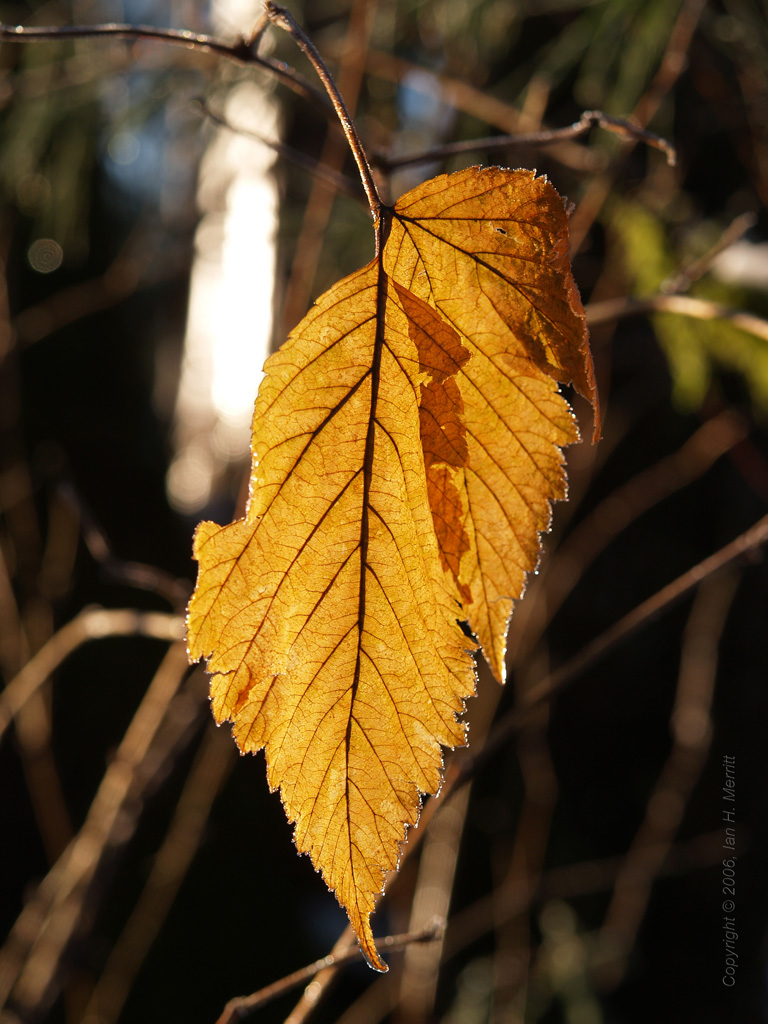
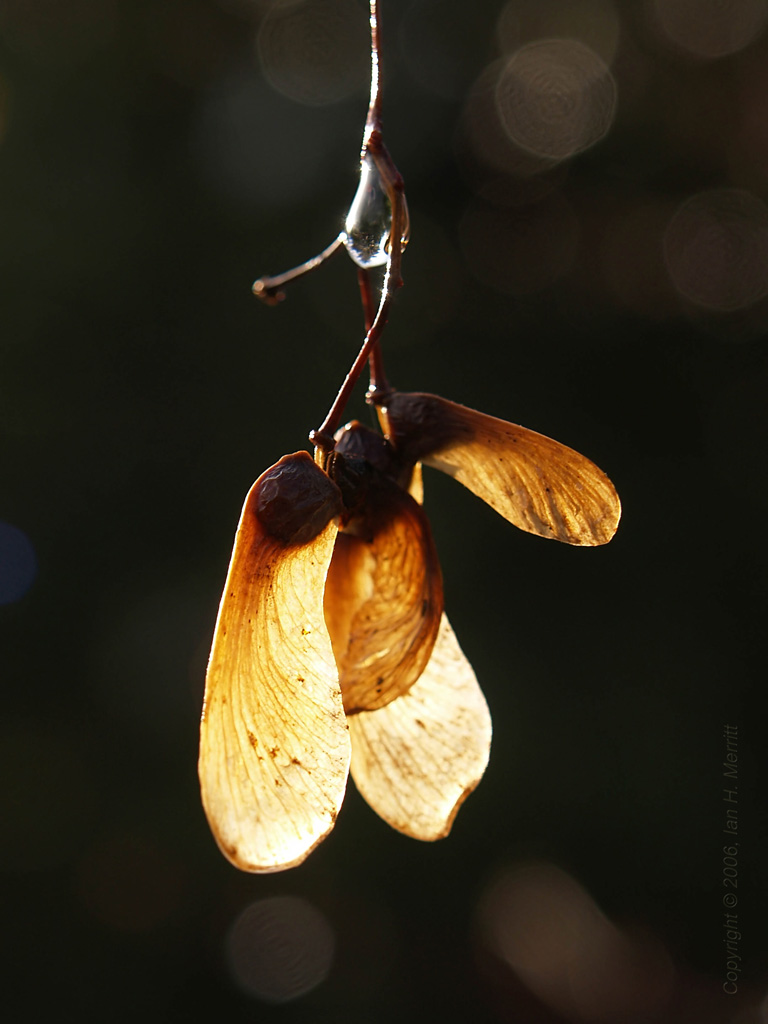
It's still officially Autumn but already the snow from the first winter storm of the season is melting away. A winged seed pod still hangs from a Japanese Maple tree that only a few weeks ago was in the midst of a spectacular color show.
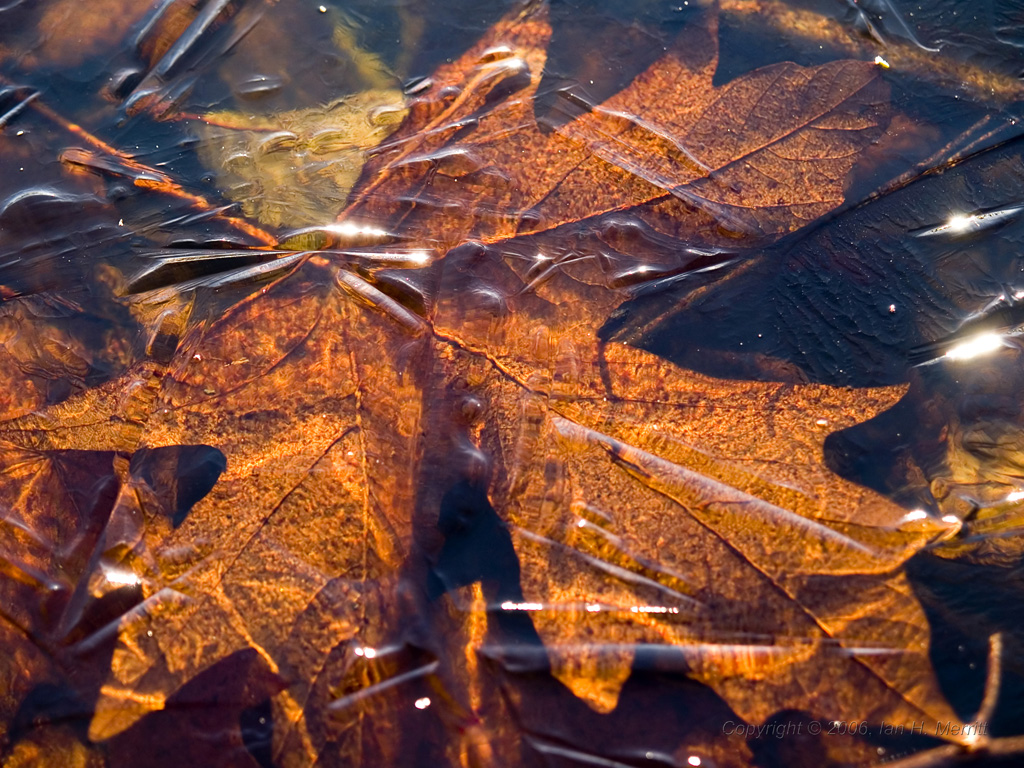
Trapped beneath the ice crust on a frozen puddle, a fallen maple leaf peers up at the rising sunlight.
To all of you leaving your wonderful comments, thank you very much. They are always greatly appreciated.
Clicking on an image will now bring up a slide-show view. Hit the 'esc' key to exit that view and return to the regular blog view.
Pin-it
Contact me?
If you wish to contact me, please feel free to leave a comment with an email address to which I can reply. Comments are individually reviewed before posting, so your email address will not be displayed publicly.
Yosemite
-
Yosemite National Park is known the world over and really needs no
introduction. Thousands of people fly over the park every day but few see
it or recogni...
בדרך לבריכה מול גבעת ברנר ים פרגים 30 למרץ 2011
-
ים אדום של פרגים
אחרי הכלניות והצבעונים
כבשו הפרגים
(הנוריות גם מציצות אך לא במסות של הכלניות והפרגים)
שדות אדומים מוקפים בחגורות צהובות של חרציות
ובין מל...
Frequently people land on this site with search queries like "what part of the eye corresponds to the camera shutter". With a camera, the shutter opens for a very precise amount of time and allows light to hit the film or sensor inside the camera. The closest comparison to that in the eye would be the eyelid that can open and close but its purpose is more analogous to that of the lens cap than the shutter. Shutter mechanisms come in a variety of configurations. More detailed information about camera shutters can be found in this article [Wikipedia].
Camera lenses also have a diaphragm iris [Wikipedia] which adjusts to increase or decrease the amount of the available light that can pass through it during any given period of time. This corresponds directly to the iris in the eye [Wikipedia] which serves the same purpose. I suspect many people confuse this with the diaphragm-type shutter mechanism, however both the eye's iris and that of the camera are visible through the lens while the shutter is generally inside the camera and out of sight. In modern cameras, the iris is usually fully open except at the moment when a picture is taken so it can be seen to move right about the same time as the shutter.




 Posts
Posts


