Western Washington has been pummeled these past few days with torrential rain. Add to this the runoff of melting snow from the mountains and you have overflowing rivers. Today, after a night of more heavy rainfall, the sun has come out to reveal the full extent of the flooding. Farms and homes are under water. Some amount of flooding is a common occurrence in this area, so the residents are somewhat used to it, but still it has displaced many people, and will no doubt leave quite a mess.
Panoramic view of the flooded valley. Click to enlarge.
Stables in the distance.
Swamped greenhouse.
Next day, same greenhouse, high, if not entirely dry just yet.
Flooded road. Note the mostly submerged speed limit sign for an idea of the depth of the water.
Evening shot of the same speed limit sign. Digits are starting to be visible indicating that the water level has fallen a few inches. See below for more evening images.
Next day noon, the water level has fallen considerably.
Another day later, the road is still impassable.
Another submerged road.
Same barn seen from the other side now that the water has gone down a lot.
Most of this road is still submerged.
Yet another flooded road and bridge in the distance. The current at this point is quite swift.
The water level has dropped enough to make the bridge accessible.
Beyond the bridge, the road is still under several inches of water but large pickup trucks are getting through.
Closer shot where the guardrail heads beneath the water.
Livestock at the water's edge.
Fences and gates showing the extent of the flooding.
That evening, the water had begun to recede but only by a little bit. The following shots were 60 second exposures.
Same location as the panoramic shot above, but closer up.
Flooded fields, mist rising from the water, cars passing by in the distance.
Next day some previously inaccessible areas opened up.
Small bridge, its guard rails now peeking out from under the water and covered with debris that was floating in the flood.
Next day, the bridge is no longer submerged. Even before the rest of the road is passable, a cleanup crew is on the scene.
Beyond the newly exposed and cleared bridge, the area is still quite flooded.
A boat tied up at the end of the bridge. It has been used to ferry people and supplies to and from the temporary island created by the flood.
Down the road a little, another flooded drive. Near the bottom of the ramp, some leaf debris forms a high water mark.
Next day, the water went down far enough to clear the road.
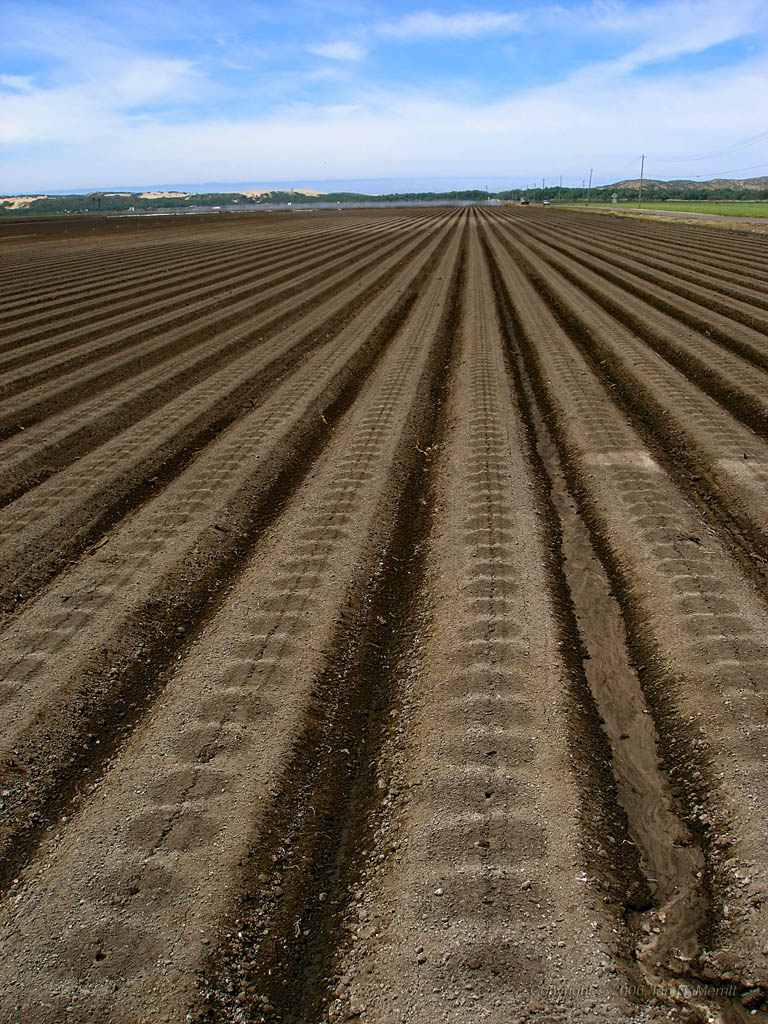
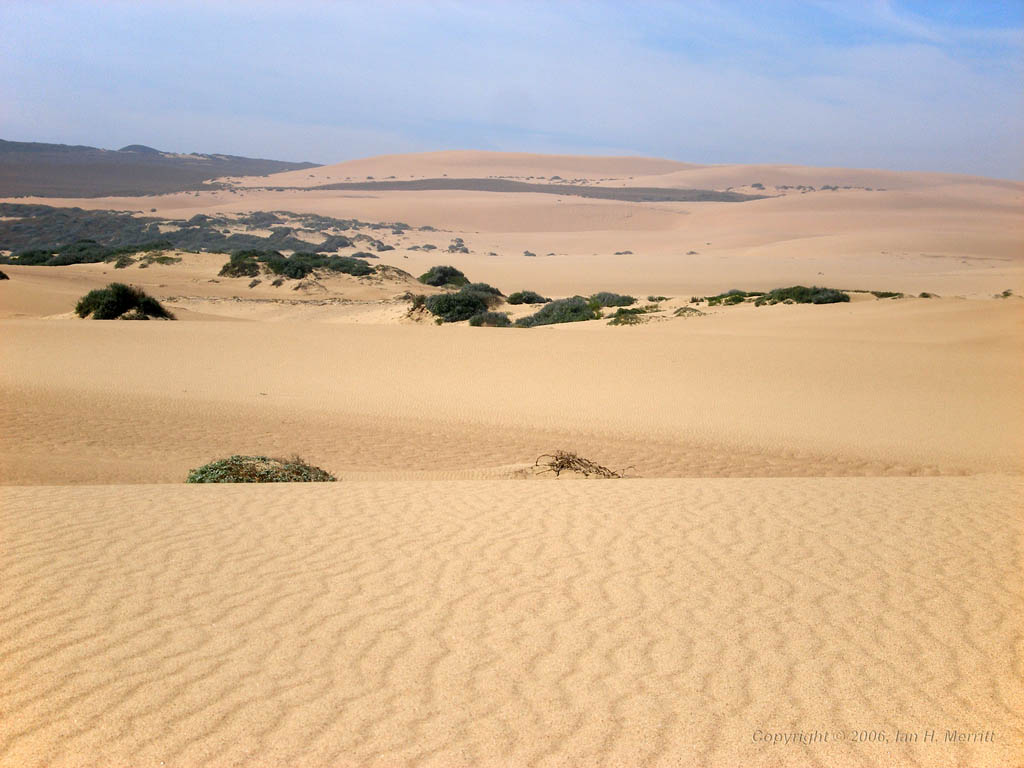
I spent the weekend in and around Santa Maria, CA, visiting with friends. We chanced upon the Rancho Guadalupe Dunes Preserve, a beautiful stretch of beach with dunes, surrounded by a small but beautiful wilderness preserve. Driving toward this park, we passed seemingly endless fields of farmland growing a variety of produce in various stages.
This field was recently ploughed and seeded with a new crop.
Just before the entrance to the park, this twisted old tree greets our arrival.
Driving into the park, a narrow winding road passes first a sand works where sandbags and trucks are loaded with sand for various uses; then climbs a sand hill to overlook a little river valley where cattle peacefully graze.
The view just across the road is of a very different landscape looking more like an isolated desolate wilderness than a coastal region so close to fertile farm land.
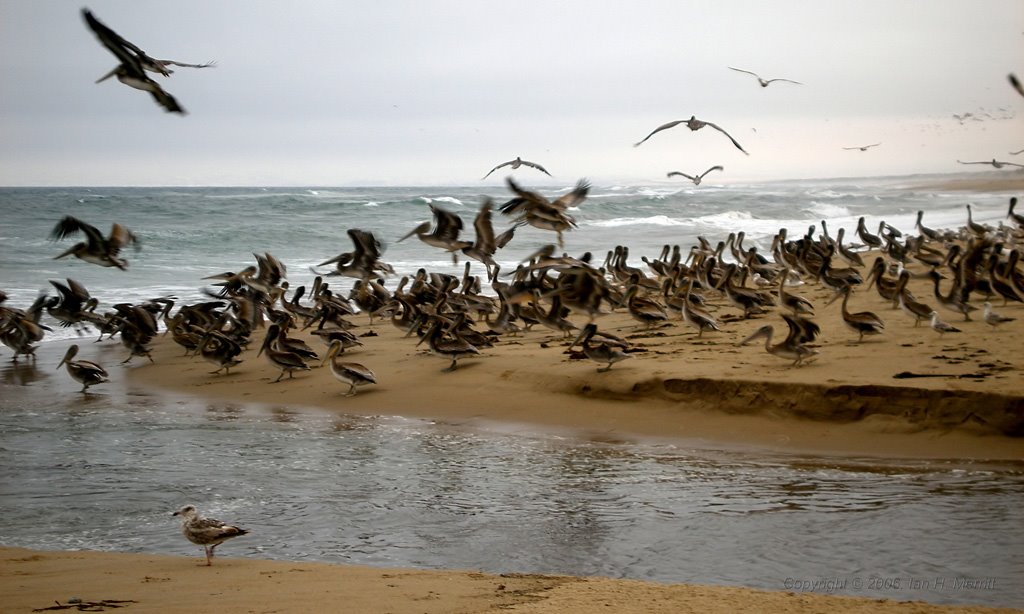
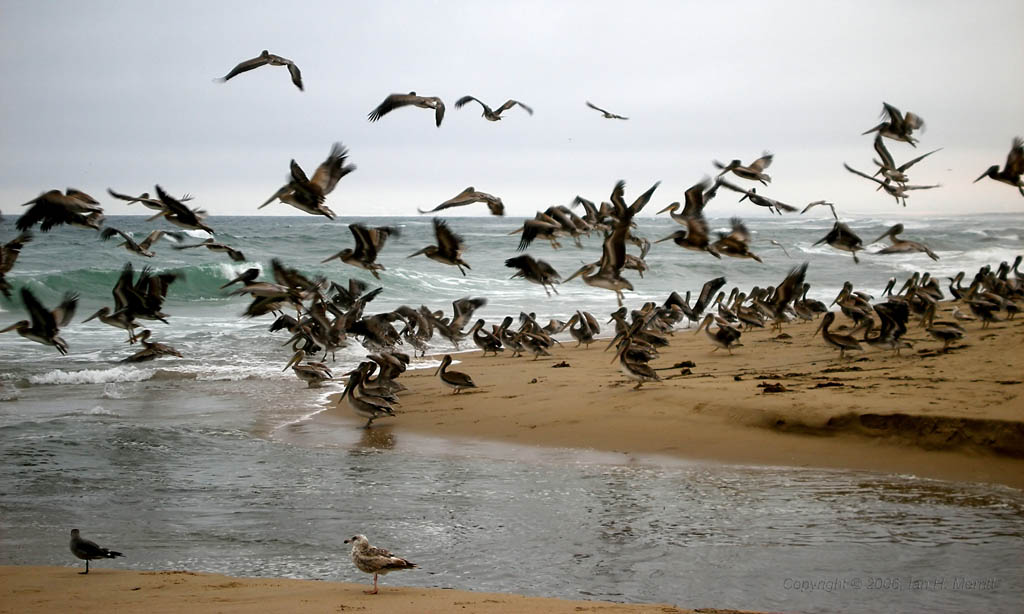
We found crowds on the beach, not of people, but pelicans, seagulls, and a few other species of birds.
Pelicans congregate on the shoreline in preparation for another sortie.
Suddenly, the sortie begins. Within a few seconds, hundreds of the huge birds surge skyward looking like a swarm of enormous bats rising into the sky.
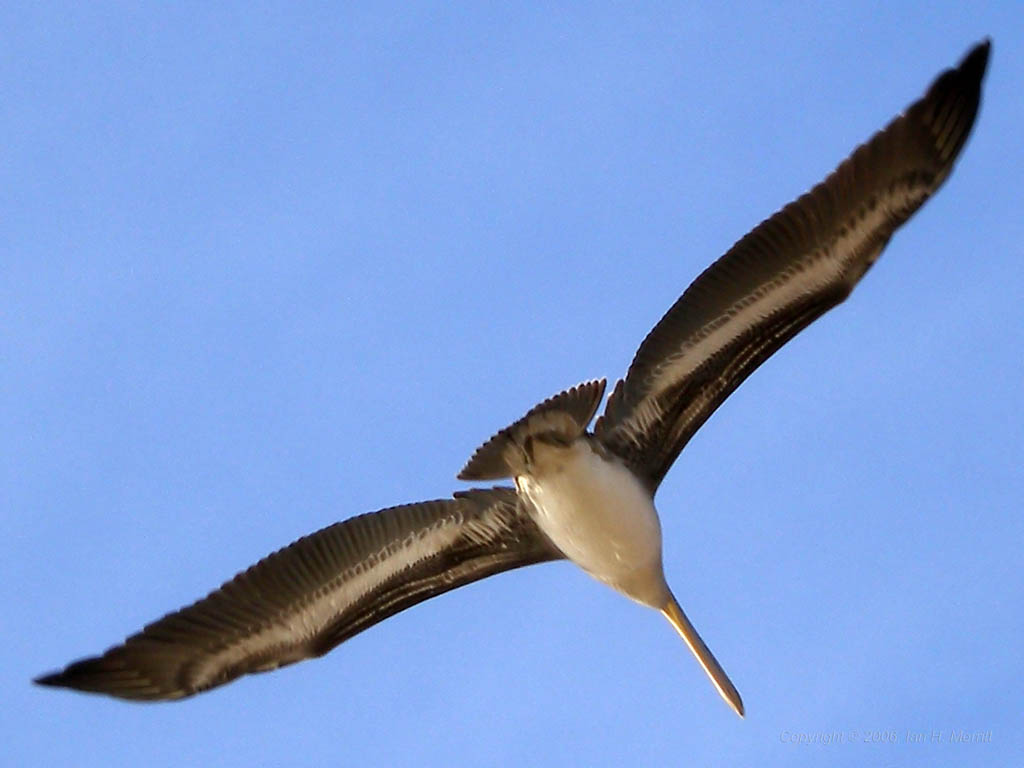
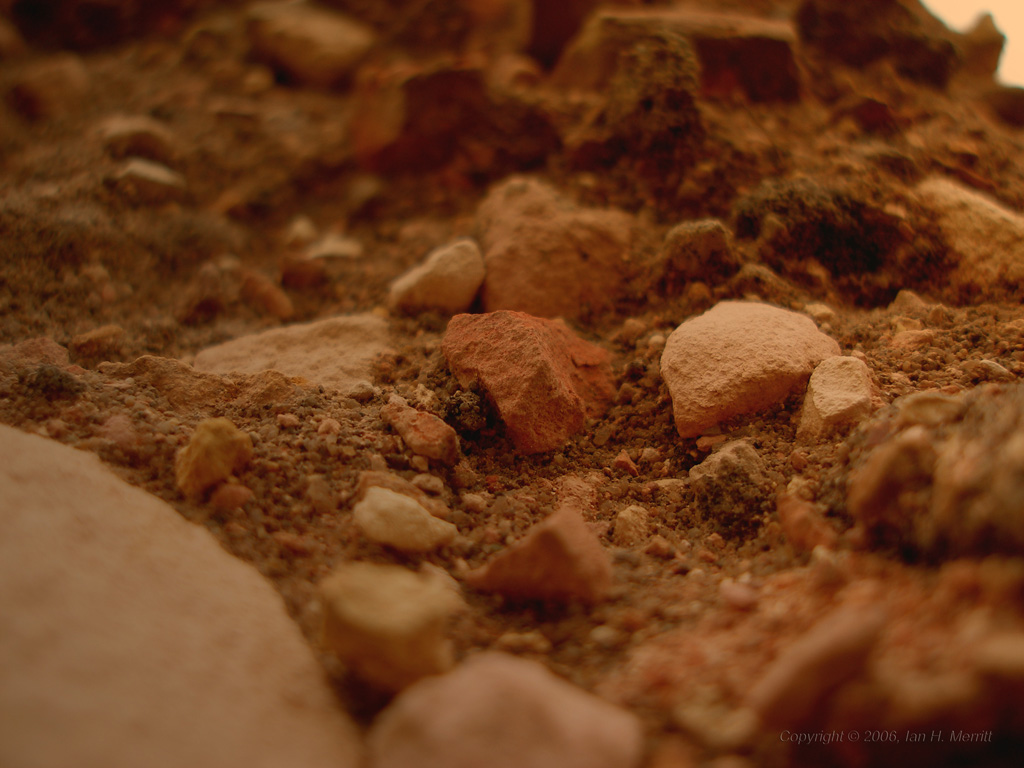
A pelican flies overhead coming around after take-off. Just a short distance from all the life lies a patch of Mars. Apparently lifeless, it consists of rocks that closely resemble many of the surface-level images sent back by the various rovers exploring the surface of that planet.
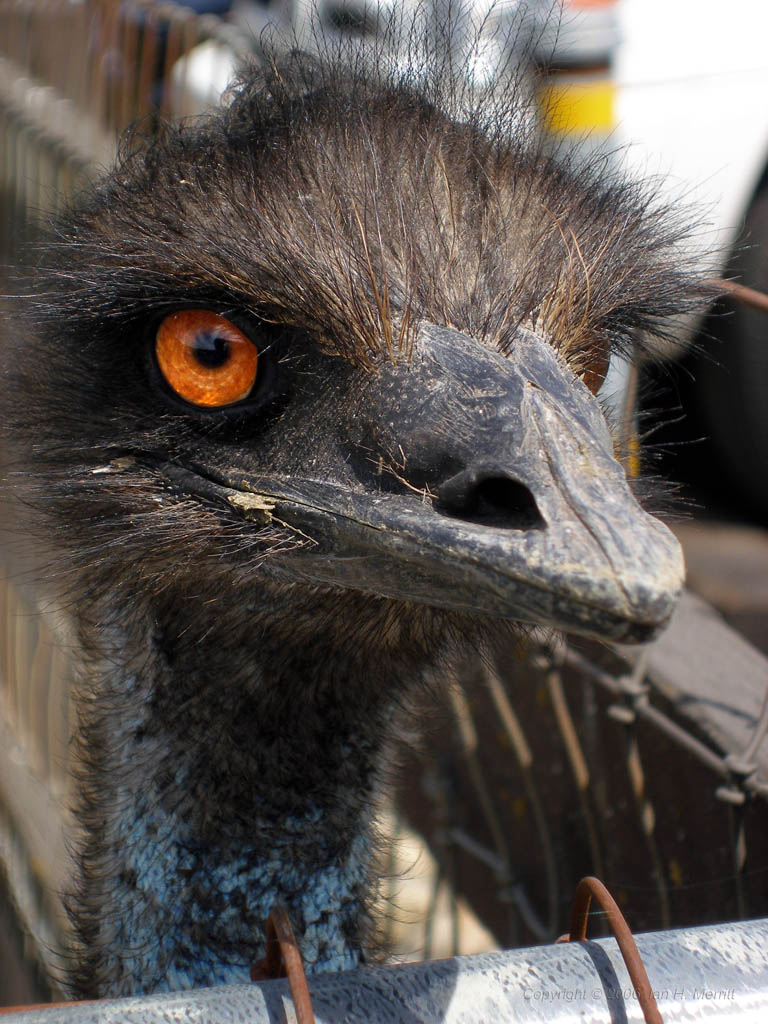
Looking rather like its dinosaur roots, an emu at a local winery peers over the fence separating it from the parking lot.
To all of you leaving your wonderful comments, thank you very much. They are always greatly appreciated.
Clicking on an image will now bring up a slide-show view. Hit the 'esc' key to exit that view and return to the regular blog view.
Pin-it
Contact me?
If you wish to contact me, please feel free to leave a comment with an email address to which I can reply. Comments are individually reviewed before posting, so your email address will not be displayed publicly.
Gershon's Blog _8_4_2026_פריחה בכרתים
-
שבוע של פריחות בכרתים
חגיגת סחלבים, 11 מינים באתר אחד
שדות של נוריות לבנות וורודות
ושלל פרחים
סחלב איטלקי
רצועית רוברטס
דומה לבן סחלב צריפ...
Yosemite
-
Yosemite National Park is known the world over and really needs no
introduction. Thousands of people fly over the park every day but few see
it or recogni...
בדרך לבריכה מול גבעת ברנר ים פרגים 30 למרץ 2011
-
ים אדום של פרגים
אחרי הכלניות והצבעונים
כבשו הפרגים
(הנוריות גם מציצות אך לא במסות של הכלניות והפרגים)
שדות אדומים מוקפים בחגורות צהובות של חרציות
ובין מל...
Frequently people land on this site with search queries like "what part of the eye corresponds to the camera shutter". With a camera, the shutter opens for a very precise amount of time and allows light to hit the film or sensor inside the camera. The closest comparison to that in the eye would be the eyelid that can open and close but its purpose is more analogous to that of the lens cap than the shutter. Shutter mechanisms come in a variety of configurations. More detailed information about camera shutters can be found in this article [Wikipedia].
Camera lenses also have a diaphragm iris [Wikipedia] which adjusts to increase or decrease the amount of the available light that can pass through it during any given period of time. This corresponds directly to the iris in the eye [Wikipedia] which serves the same purpose. I suspect many people confuse this with the diaphragm-type shutter mechanism, however both the eye's iris and that of the camera are visible through the lens while the shutter is generally inside the camera and out of sight. In modern cameras, the iris is usually fully open except at the moment when a picture is taken so it can be seen to move right about the same time as the shutter.







 Posts
Posts


